 Garage
Snowmobile Helmets: ECE 22.06 Standard and Heated Visors, the Winning Combo
Find out why the ECE 22.06 standard combined with a heated visor is the ultimate safety setup for snowmobiling on Quebec trails this winter.
Snowmobile Helmets: ECE 22.06 Standard and Heated Visors, the Winning Combo
When temperatures drop below -20 °C on Quebec's snowmobile trails, your helmet is no longer just an accessory — it's critical safety equipment. Between new international certification requirements and thermal comfort technologies, two innovations now dominate the market: the ECE 22.06 standard and heated visors. Understanding why this duo has become the consensus choice among serious snowmobilers means making an informed decision for both your safety and your riding enjoyment.
The ECE 22.06 Standard: What Really Changed
Since its progressive adoption starting in 2022, the ECE 22.06 (Economic Commission for Europe) standard has replaced the older ECE 22.05 version and represents a major evolution in helmet protection certification. For snowmobile enthusiasts, this distinction deserves close attention.
Significantly More Rigorous Testing Protocols
The 22.06 introduces several fundamental changes compared to its predecessor:
- Oblique impact testing: unlike the 22.05, which only tested perpendicular impacts, the new standard simulates rotational impacts — far more representative of real-world accidents. This requires redesigned internal foams and structures to dissipate rotational energy.
- Expanded test zones: shell coverage is more comprehensive, including lateral and frontal zones previously overlooked.
- Enhanced quality control: manufacturers are subject to more frequent production audits. A certified 22.06 helmet bears a label with the letter « E » followed by the country number and certification code.
- Chin strap retention testing: fastening system resistance tests are more stringent — especially relevant in snowmobiling where vibrations and falls can heavily stress the chin bar.
Why This Matters in the Quebec Context
On Quebec's snowmobile trails, extreme winter conditions — ice, packed snow, polar temperatures — increase the kinetic forces involved in potential accidents. A helmet certified to ECE 22.06 offers superior biomechanical protection, particularly in collisions with fixed obstacles or off-trail incidents. This is not merely a legal compliance badge; it represents a genuine advancement in snowmobiler safety.
The Heated Visor: Far More Than a Comfort Feature
A heated visor is often perceived as a luxury. In reality, it is an active safety element in its own right. Here's why.
The Frost and Fogging Problem
In Quebec snowmobiling, freezing fog conditions, sudden temperature swings between forest cover and open plains, and the moisture from your own breath create a formidable enemy: fogging and icing on the visor. Even partial visor opacity dramatically reduces visibility and can cause serious accidents on high-speed trails.
How a Heated Visor Works
Modern heated visors integrate a transparent resistive film powered by a rechargeable battery (often integrated into the helmet or worn on the body). This film maintains the inner surface of the visor at a temperature sufficient to prevent condensation from forming. Premium systems offer multiple adjustable heat settings and a battery life of up to 6 to 10 hours depending on conditions.
CKX Helmets: The Reference for the Quebec Market
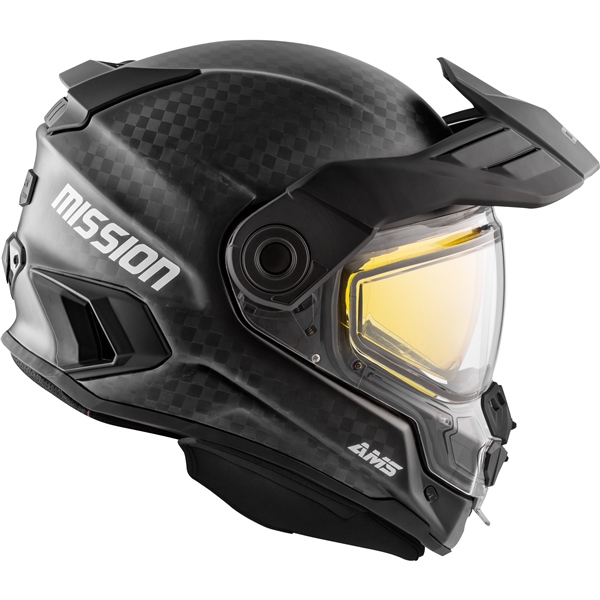
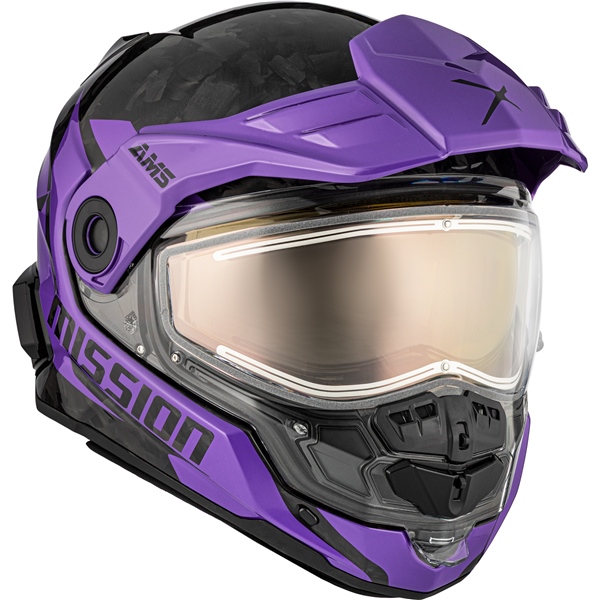
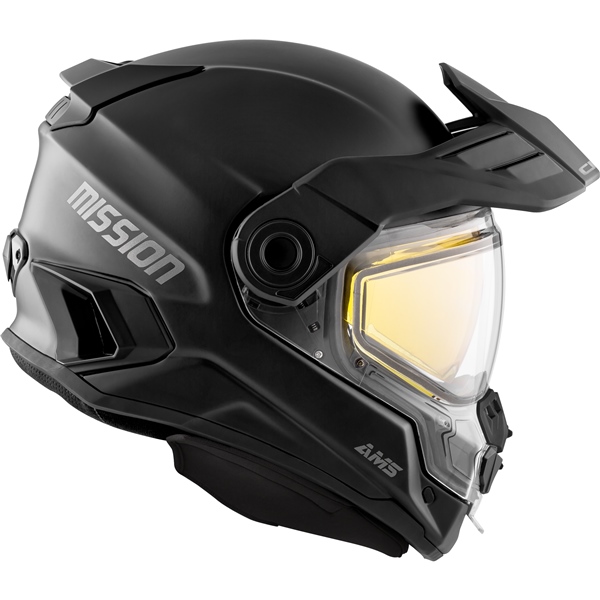
Among the brands that have successfully combined the ECE 22.06 standard with heated visor technology, CKX stands out as an essential player — and for good reason. Founded in Quebec, CKX designs its helmets for real northern winter conditions. Their snowmobile-specific models combine ECE 22.06 certification, compatibility with heated visor systems, and features engineered for our climate: removable and washable liners, glove-friendly ventilation controls, and polycarbonate or composite shell construction adapted to extreme cold.
Choosing the Right Helmet: Essential Criteria
Before investing in a new snowmobile helmet, here are the points to verify systematically:
- ECE 22.06 certification: check the interior label of the helmet. The « E » marking with country code and batch number is mandatory.
- Heated visor compatibility: not all helmets are ready to accept a heated visor. Verify whether the model comes with or is compatible with a heating system, and what type of connector is used.
- Helmet type: full-face or modular? In snowmobiling, the full-face offers the best protection and insulation. Modular helmets can be practical, but confirm they maintain certification in the closed position.
- Fit and sizing: a poorly fitted helmet, even if certified, will not protect effectively. Always try on the helmet before purchasing, or refer to the manufacturer's measuring guides.
- Audio system readiness: many CKX helmets are pre-wired for Bluetooth intercoms — a major advantage for group communication on the trail.
Maintenance and Lifespan
A snowmobile helmet is not meant to last forever. Safety standards recommend replacement every 5 years, or immediately after any significant impact — even with no visible damage. The EPS (expanded polystyrene) liner compresses upon impact and does not return to its original form. Always store your helmet away from UV exposure and chemical products (fuel, solvents), which degrade composite materials over time.
Conclusion: Invest in Your Safety
The combination of an ECE 22.06 certified helmet and a quality heated visor is not an unnecessary expense — it is the most rational investment you can make before heading out on Quebec's snowmobile trails. The visual clarity guaranteed by the heated visor, combined with the superior biomechanical protection of the 22.06 standard, allows you to fully enjoy the trails with confidence, regardless of temperature.
At Mathias Power Parts in Saint-Mathias-sur-Richelieu, our team of passionate riders is here to help you find the CKX helmet or any other certified model that matches your riding style and budget. Visit our online store at mathiaspowerparts.com or come see us in person for a personalized fitting. Ride hard, ride protected.
💬 Comments (0)
Sign in to leave a comment
Sign inLoading…
Recommended by the author
Products from this article
Keep reading
Guide d'achat
Quick-Release Systems (LinQ, Lock & Ride): The Must-Have Snowmobile Accessories
Discover how LinQ and Lock & Ride quick-release systems turn your snowmobile into a true expedition machine. A complete guide to choosing the right accessories for your riding style.
Guide d'achat
Jethwear SAFE: Why the Venture Model is the Guardian Angel of Lake Crossers
Discover why Jethwear SAFE technology integrated into the Venture jacket and pants represents the ultimate in safety for snowmobilers crossing Quebec's lakes.