 Garage
Leatt 360° Turbine: The Technology Revolutionizing Motocross Helmet Safety in 2026
Discover how Leatt's 360 degree turbine technology surpasses MIPS and redefines rotational protection standards for motocross helmets in 2026.
Leatt 360° Turbine: The Technology Revolutionizing Motocross Helmet Safety in 2026
In the world of motocross and enduro, rider safety has never been more central to gear development. With the rollout of the updated ECE 22.06 standard and rapid advances in cranial protection systems, motocross helmets are entering a new era. Leading this technological revolution is Leatt and its groundbreaking 360 degree turbine technology. At Mathias Power Parts in Saint-Mathias-sur-Richelieu, we help Quebec riders choose equipment that matches their riding demands — and this guide is here to help you make the right call.
Understanding the Risk: Rotational Acceleration
Most serious brain injuries in motorsports don't come from direct impacts, but from the rotational acceleration transmitted to the brain during oblique impacts. When a helmet strikes a surface at an angle, it generates a twisting motion that can cause diffuse brain injuries, even without a skull fracture. This biomechanical phenomenon is exactly what next-generation protection systems aim to neutralize.
Why Traditional Helmets Are No Longer Enough
Classic EPS foam effectively absorbs linear impacts but is largely ineffective against rotational forces. The ECE 22.06 standard — now mandatory for new homologations in Europe and a benchmark in Canada — specifically includes tests for rotational acceleration, a major first compared to the older ECE 22.05.
The 360 Degree Turbine Technology: How It Works
Developed by Leatt in collaboration with neurosurgeons and biomechanical engineers, the 360 degree turbine technology is based on viscoelastic cylinders integrated directly into the helmet's foam structure. These turbines, strategically placed across the entire inner surface, act on two axes simultaneously:
- Linear absorption: The turbines compress during direct impacts, dissipating energy like traditional EPS foam but with greater efficiency.
- Rotational management: During oblique impacts, the turbines deform and rotate on themselves, dissipating torsional forces before they reach the brain.
- Elastic recovery: Unlike EPS foam which crushes permanently, the turbines partially recover their shape, offering improved multi-impact protection.
The result: according to data published by Leatt, the 360 degree turbine technology reduces rotational acceleration forces by up to 40% compared to a standard EPS helmet.
Comparison: 360° Turbine vs MIPS
The question comes up often among riders: what's the difference between Leatt's technology and MIPS (Multi-directional Impact Protection System)? Here is an objective comparison.
The MIPS System
MIPS is a slip-plane liner placed between the rider's head and the helmet's foam. During an oblique impact, this membrane can move a few millimeters independently of the helmet, reducing rotational forces transmitted to the skull. It's a proven system found in many brands (Bell, Fox, Troy Lee Designs, etc.).
The Structural Superiority of the 360° Turbine
Where MIPS acts after energy has passed through the foam, the 360 degree turbine acts within the absorbing structure itself. This integrated approach offers several practical advantages:
- Active protection across 360 degrees with no dead zones
- No additional liner that could peel off or degrade over time
- Simultaneous management of both linear AND rotational impacts within a single component
- Better compliance with ECE 22.06 oblique impact test requirements
- Optimal integration with the helmet's ventilation system
In summary: MIPS is an excellent entry-level solution for rotational management, but the 360 degree turbine represents a more holistic and comprehensive architectural approach.
Leatt 2026 Helmets: What You Need to Know
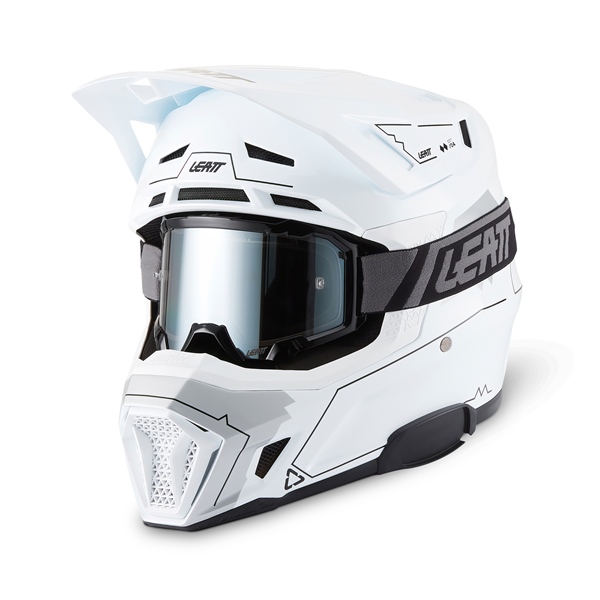
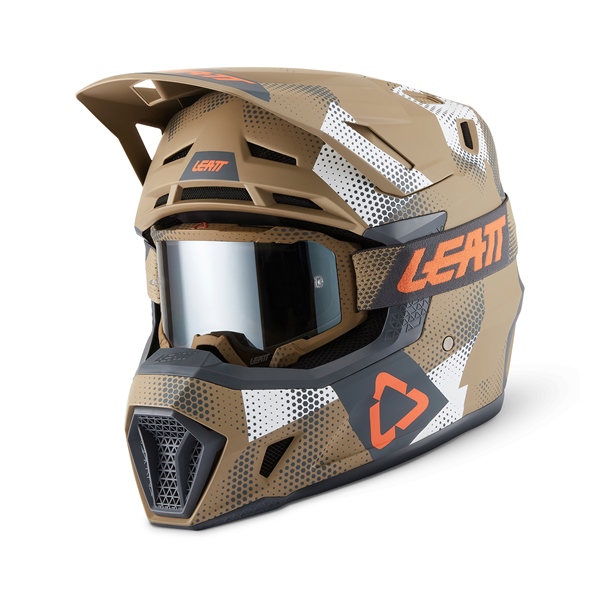
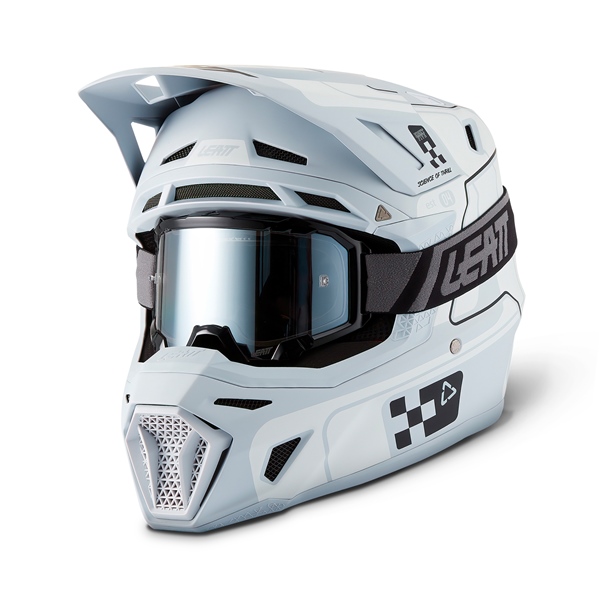
The Leatt 2026 helmet lineup integrates turbine technology across multiple tiers of the collection, from the Moto 3.5 to the top-of-the-line Moto 9.5 Carbon. All homologated models carry the ECE 22.06 certification, ensuring protection that meets the latest standards. For Quebec riders who ride from spring through fall in often wet and muddy conditions, the durability of Leatt materials and the efficiency of their ventilation system are additional advantages worth noting.
Key Buying Considerations
Before investing in a new helmet, keep these points in mind:
- Always verify the presence of the ECE 22.06 logo inside the helmet
- A helmet that has sustained a significant impact must be replaced, even if no visible damage is present
- The recommended service life of a motocross helmet is generally 5 years from the manufacturing date
- In-store fitting remains essential: head shapes vary significantly from person to person
Our Verdict
Leatt's 360 degree turbine technology is not just a marketing argument — it's a genuine biomechanical advancement, validated by independent testing and aligned with the requirements of the ECE 22.06 standard. In any objective comparison against MIPS and competing systems, Leatt clearly comes out ahead for comprehensive protection against rotational acceleration. If you're looking for the best motocross helmet for the 2026 season, the Leatt 2026 helmet range deserves your serious consideration.
At Mathias Power Parts, we carry a carefully selected range of protective gear for moto, motocross, and powersports enthusiasts in the Saint-Mathias-sur-Richelieu area and across the Montérégie region. Visit our online store at mathiaspowerparts.com to explore our Leatt helmet selection and get expert advice from our team.
💬 Comments (0)
Sign in to leave a comment
Sign inLoading…
Recommended by the author